RECLAIMING METAL AND STONES
We dismantle, recover and reuse metal and gemstones. Stones are cleaned and arranged so you can really see and understand them.
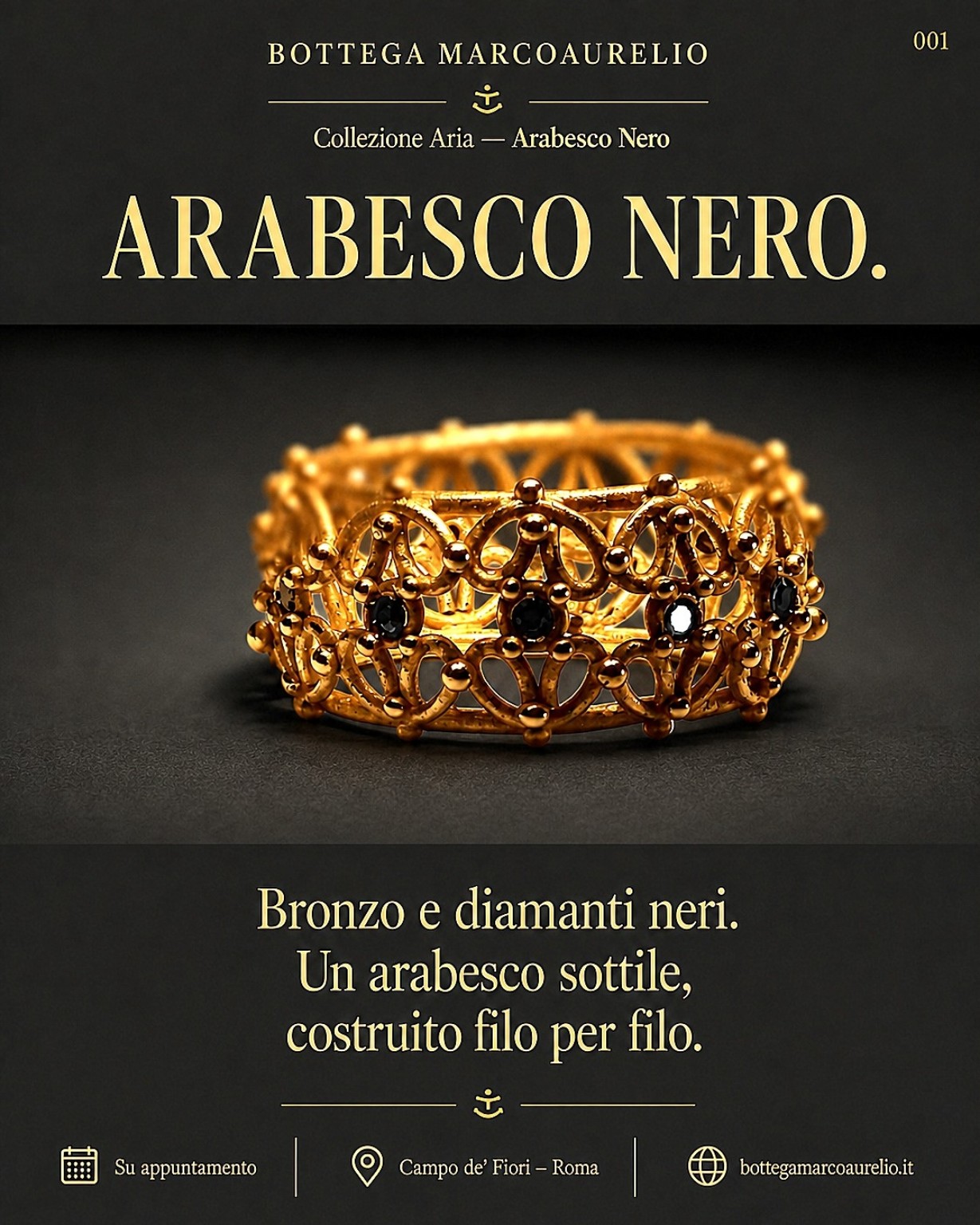
This is a working artisan goldsmith’s workshop. You can commission a piece, make your own jewellery with us, learn craft skills or give new life to jewellery you already own.
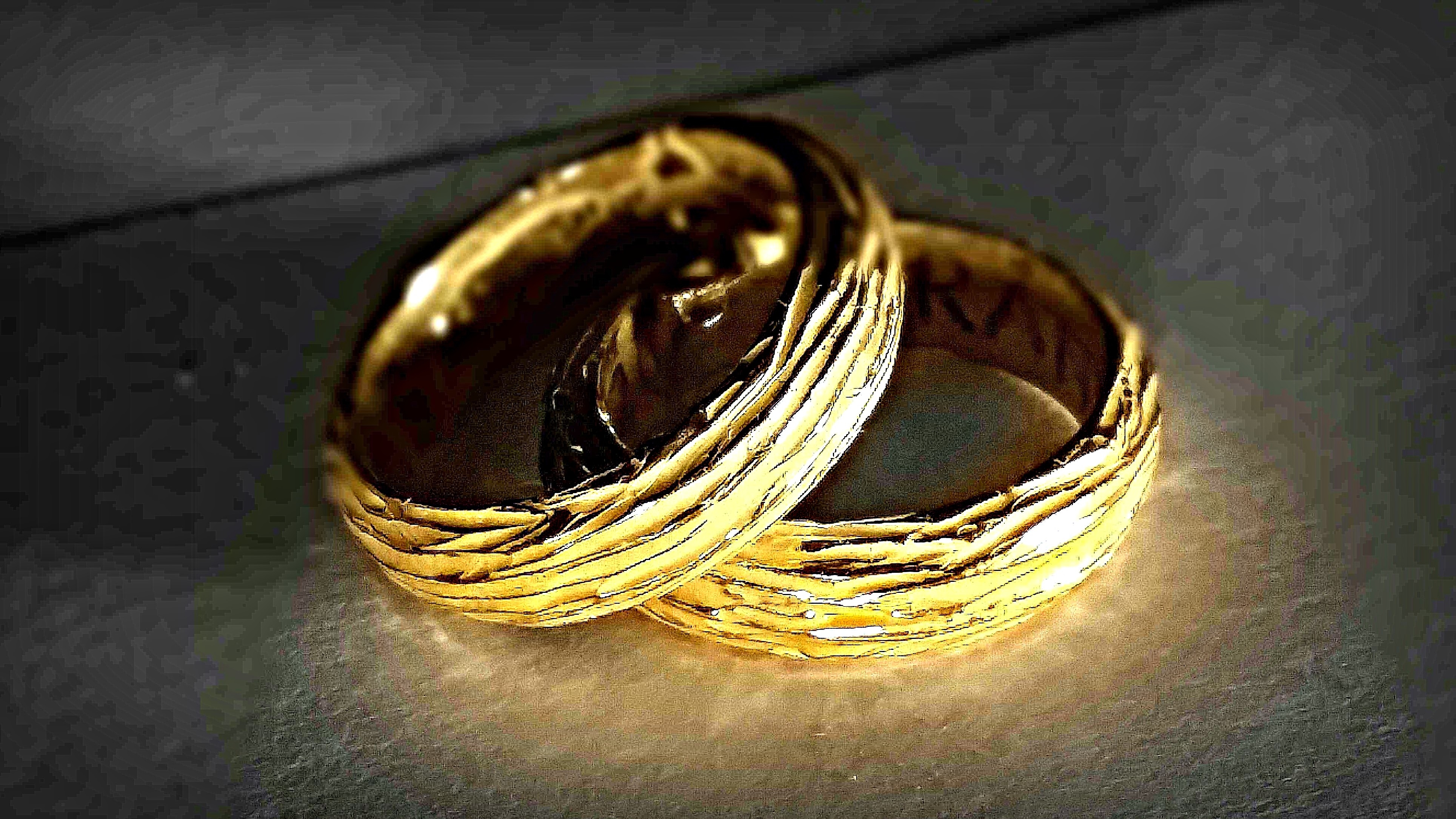
Make your own wedding bands, personally guided at the Old Bench. This experience is already available.
Classic Etruscan wedding bands · from €800 per pair for the guided experience · metal excluded Photo: NIDO, an artistic design distinct from the entry-level model.Explore the experience →
Original pieces, limited collections, bespoke jewellery, transformations and repairs.
Explore the experience →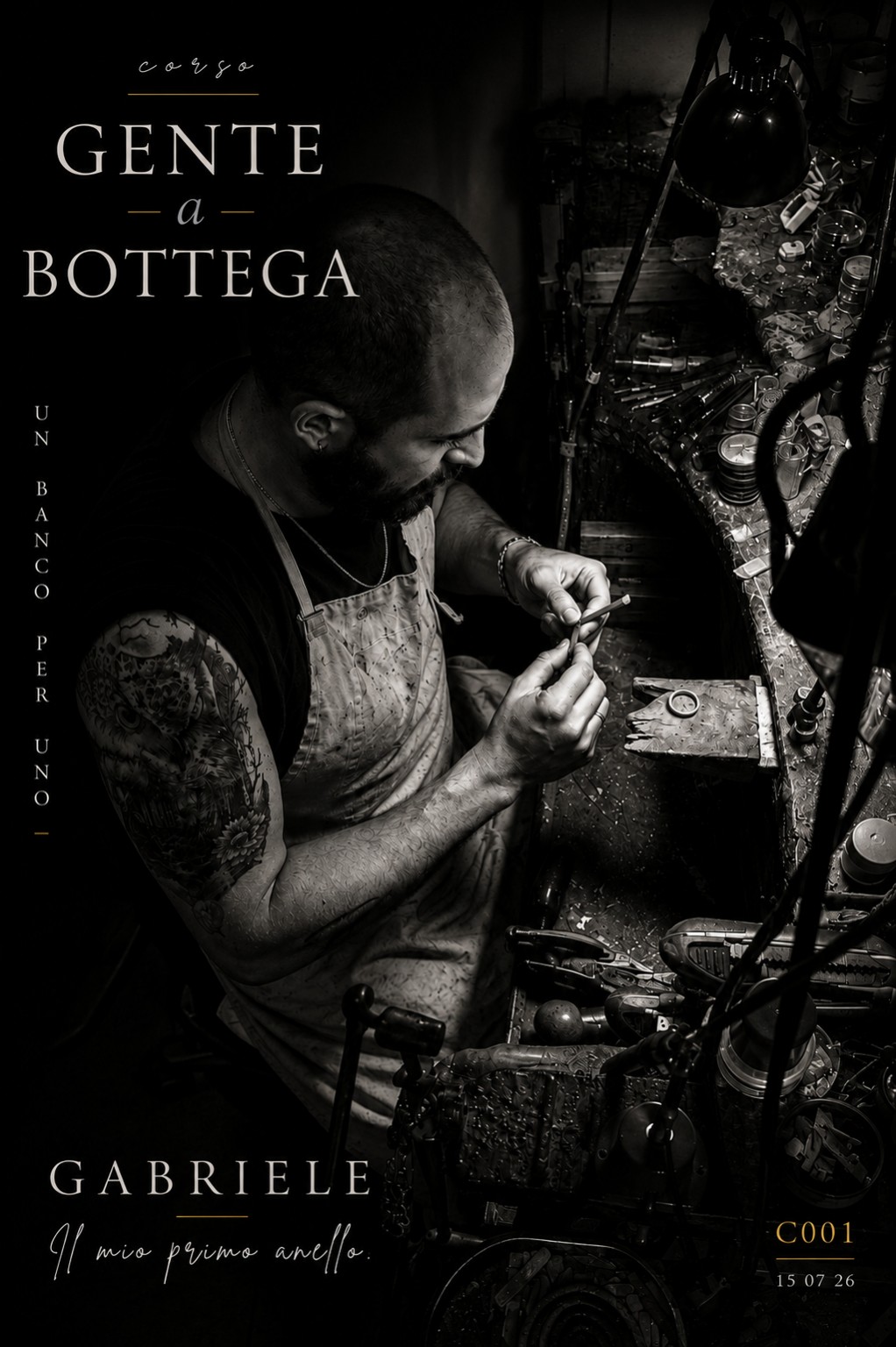
Come into a real workshop and make your own piece, using real tools with personal guidance.
Explore the experience →We dismantle, recover and reuse metal and gemstones. Stones are cleaned and arranged so you can really see and understand them.
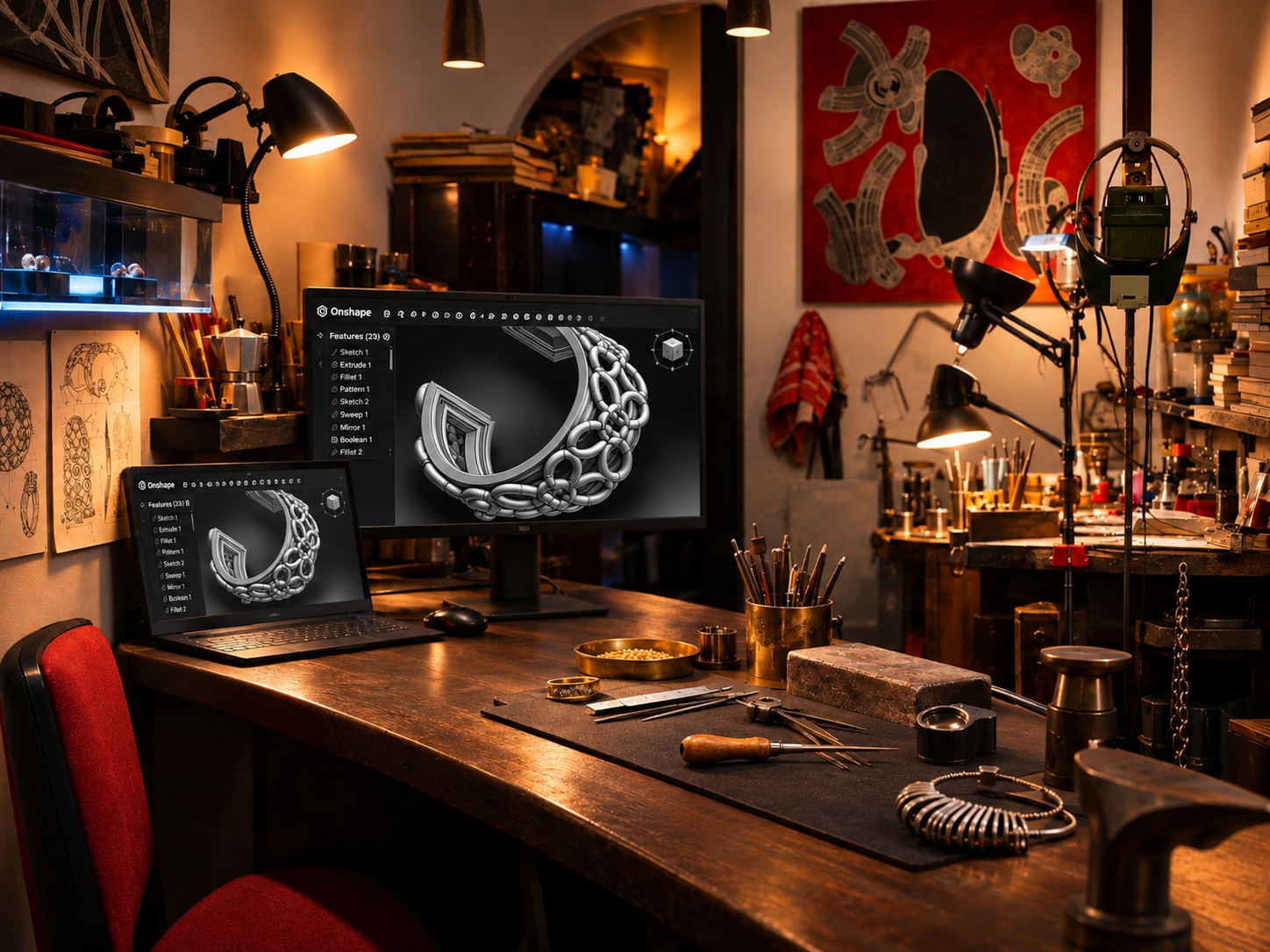
Individual Onshape lessons. At this stage, the fee is at your discretion. By appointment.
Discover the sessions →You don't have to do it all. Learn one stage, or entrust us with the next steps. Casting is arranged with partner workshops; details and costs are agreed for each project.
Three ways to experience Bottega: choose, create, learn. Explore the established experiences and finished pieces below.
DESIGN AT THE WORKSHOP
From an idea to a digital model: learn to build and refine jewellery designs using Onshape, at the workshop CAD station.
We start from your experience and work on a real project, from precise measurements to preparing a model for 3D printing.
At this stage, individual sessions are offered with a freely chosen fee.
By appointment only.
a Bottega
4.9/5 on Google ↗A real working goldsmith’s workshop. The Old Bench, visible from the street.
In the very heart of Rome.
Method for couples
Make your wedding bands and learn how they are made. Guided at the Old Bench, in the very heart of Rome.
No previous experience needed
Personal method
A personal jewel, conceived by you or suggested by me, and made by you here in the workshop.
I do not call it a course
Jewels / commissions
Unique pieces, collections, ready works and made-to-measure jewels made by me.
Buy or commission
Fedi a Bottega
You work at the Old Bench yourselves, inside a real working goldsmith’s workshop. I guide you step by step: you take home not only the rings, but the process too.
Make your wedding bands yourselves. The guided experience for a pair of classic Etruscan wedding bands starts at €800. Metal excluded. Other designs, time requirements and costs are agreed individually.
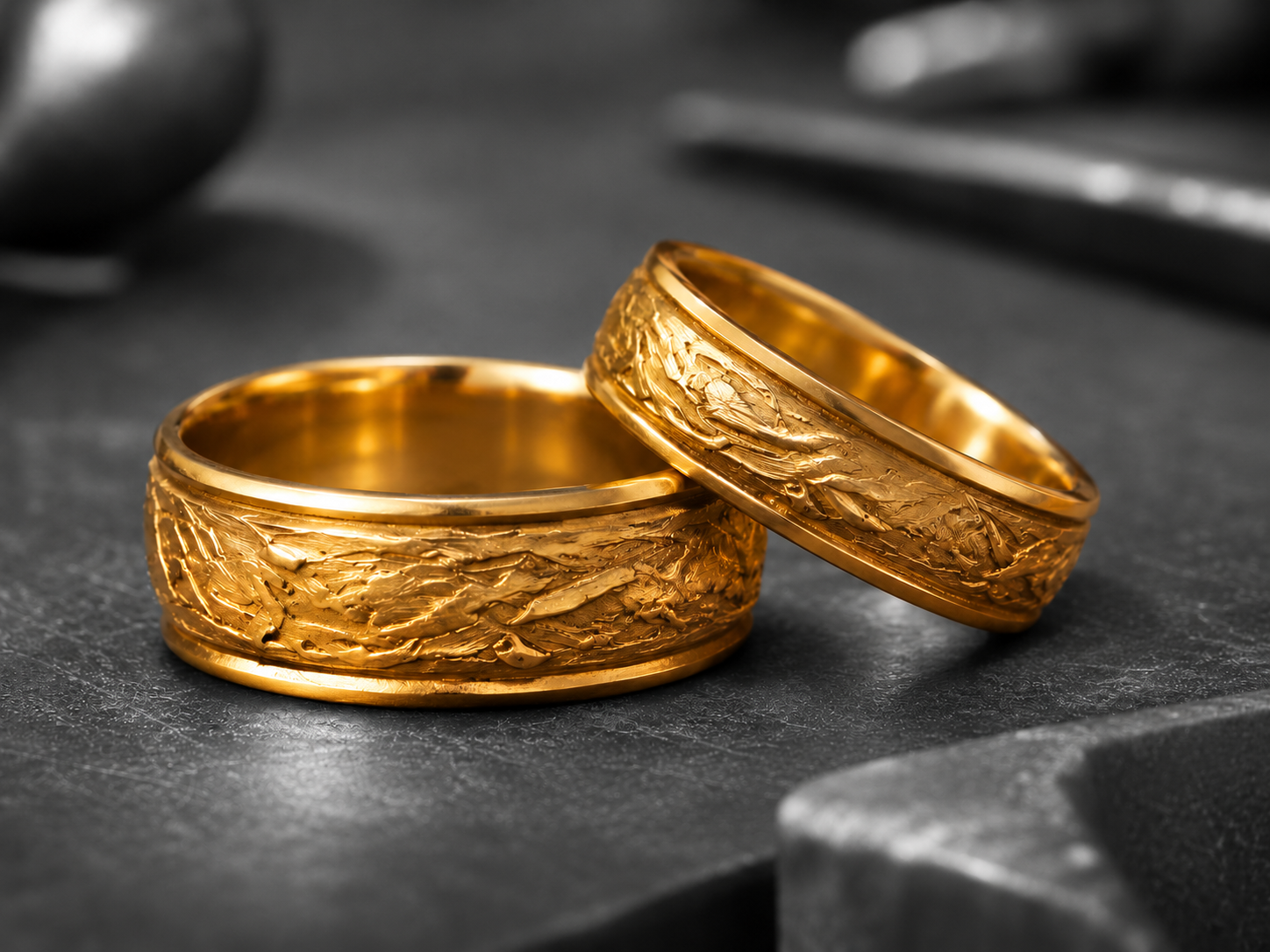
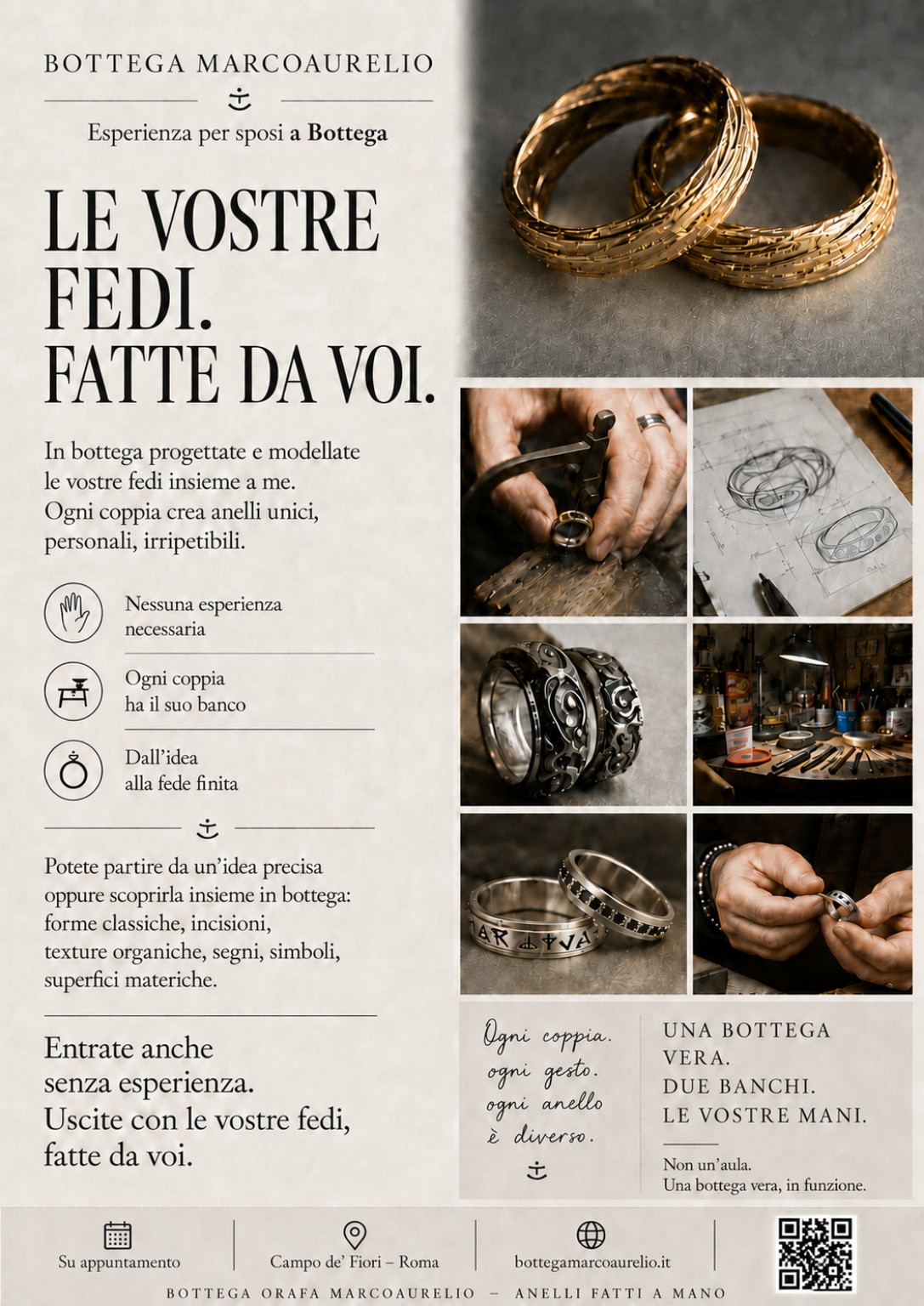
You come in not knowing how to do it. You leave with your wedding bands and the process you learned.
One guest works at the bench while the other stays beside them and watches. Then you swap. I follow every step, constantly.
The process remains yours: you can use it again to create other rings of the same kind and endless variations.
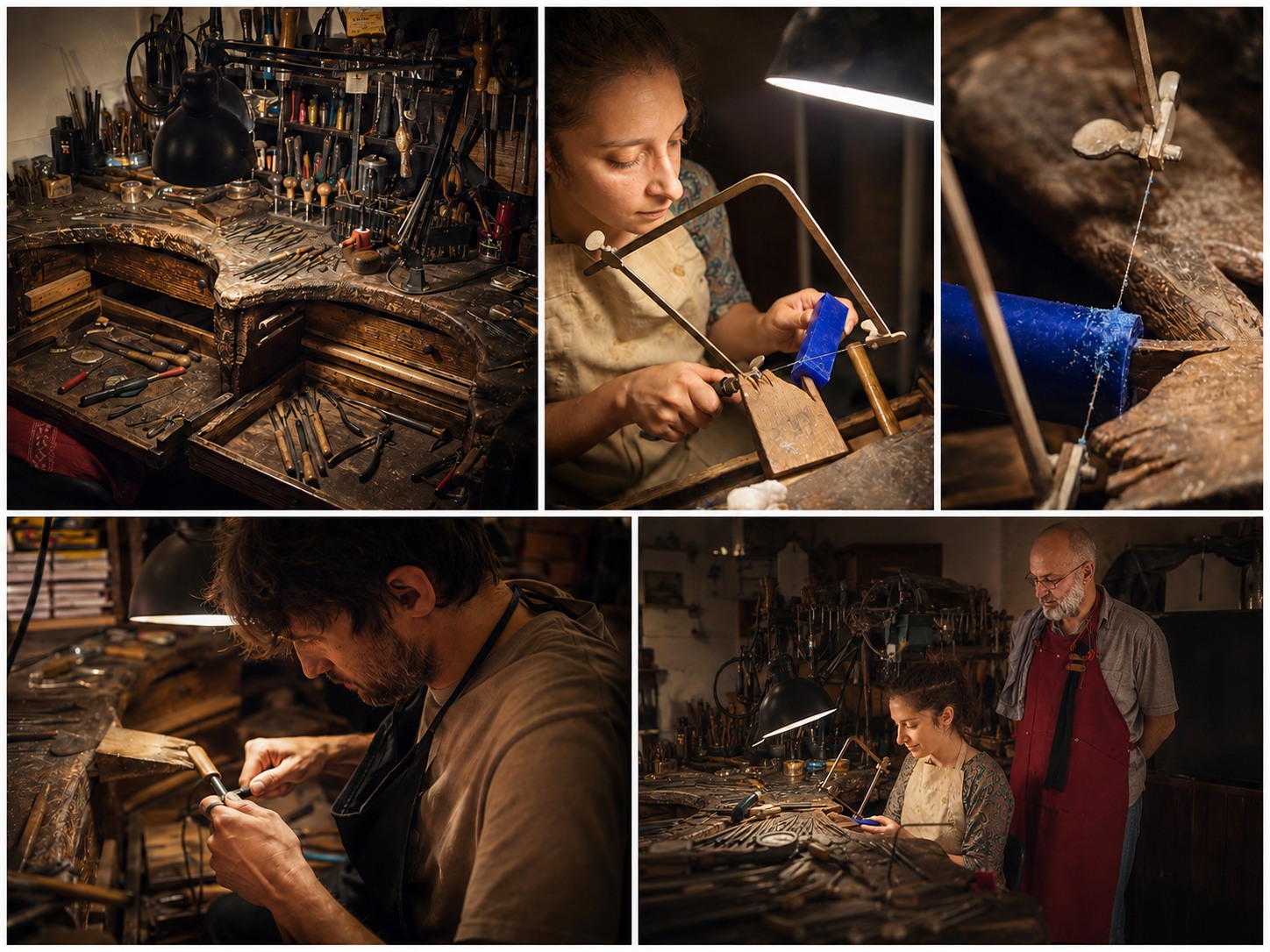
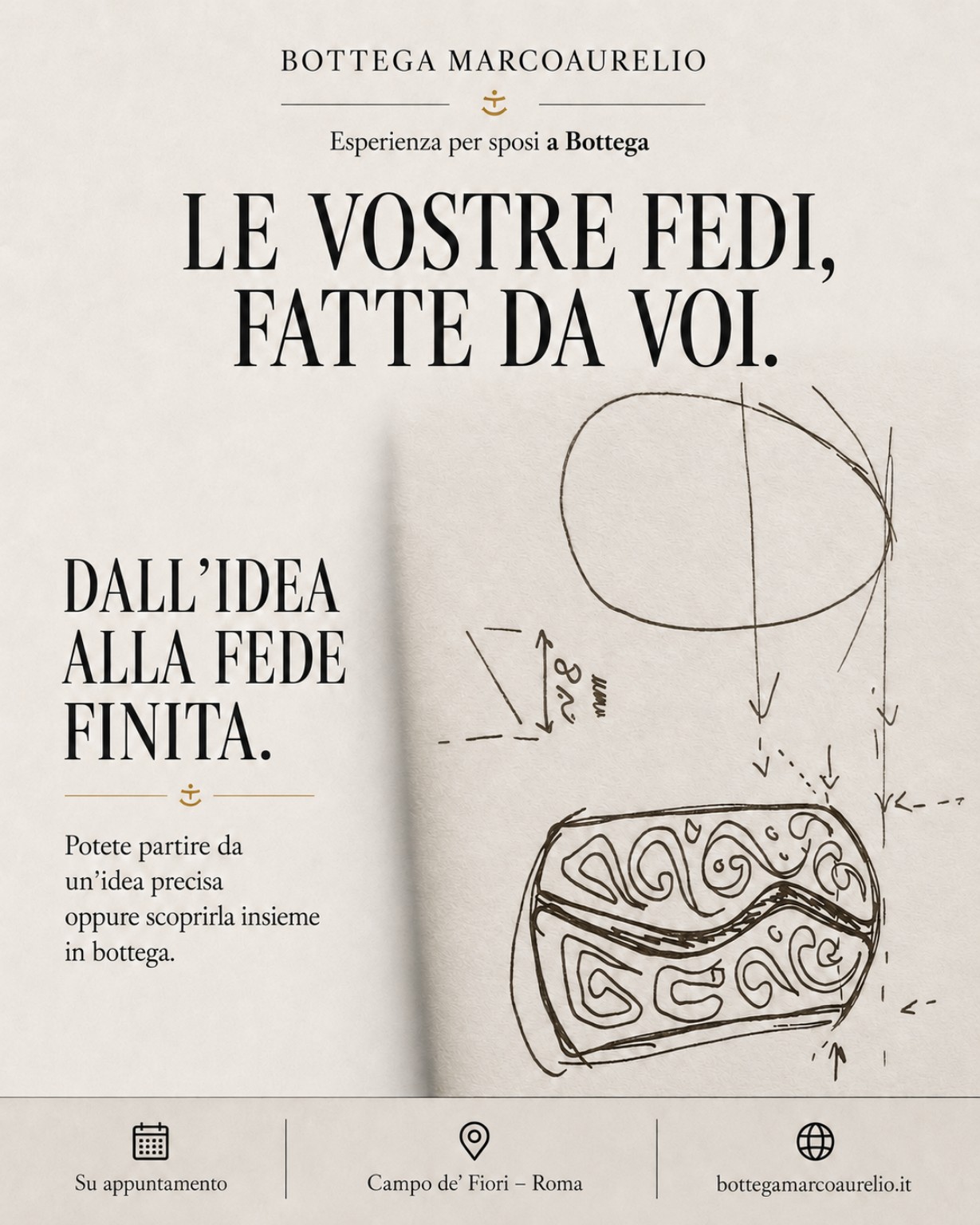
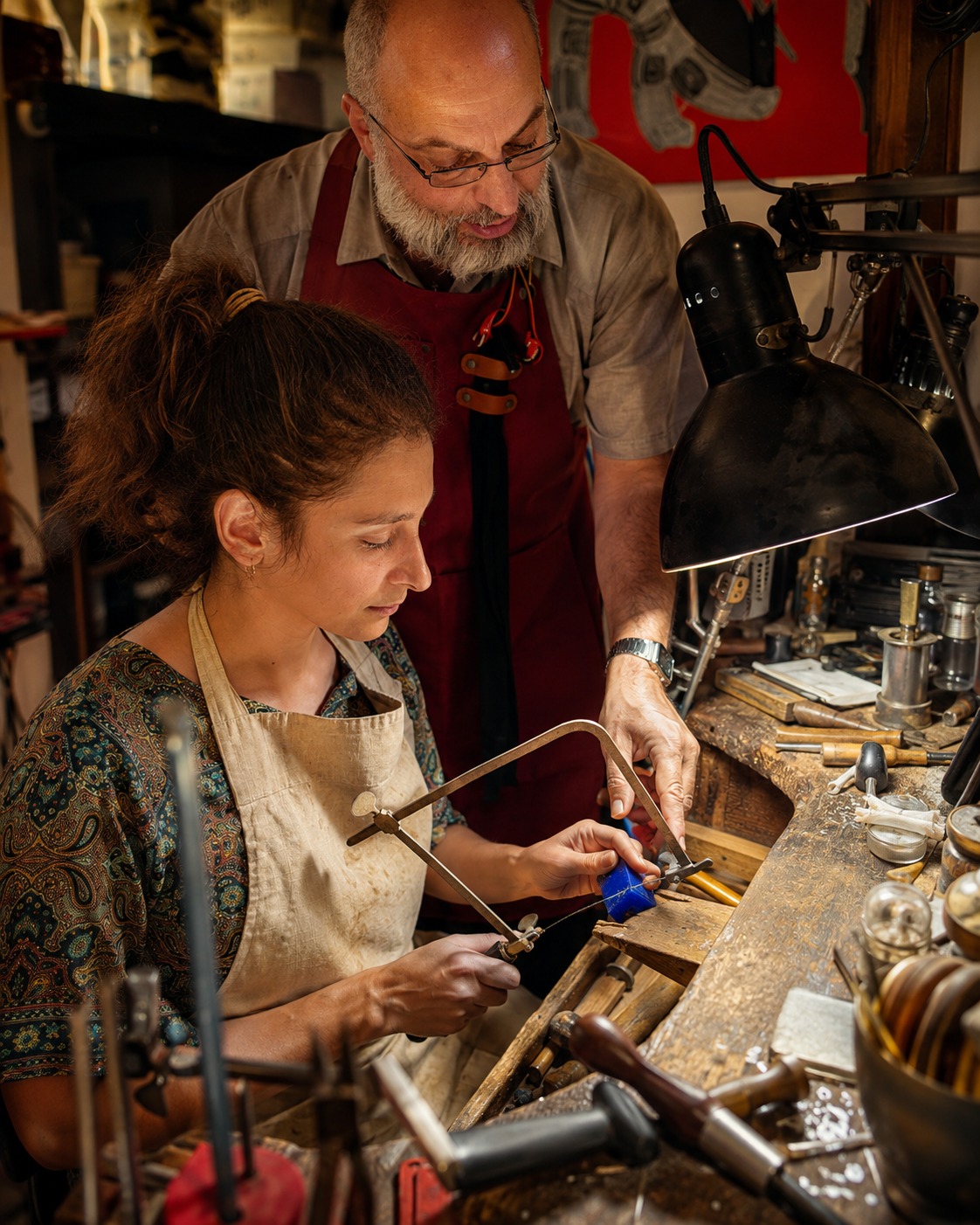
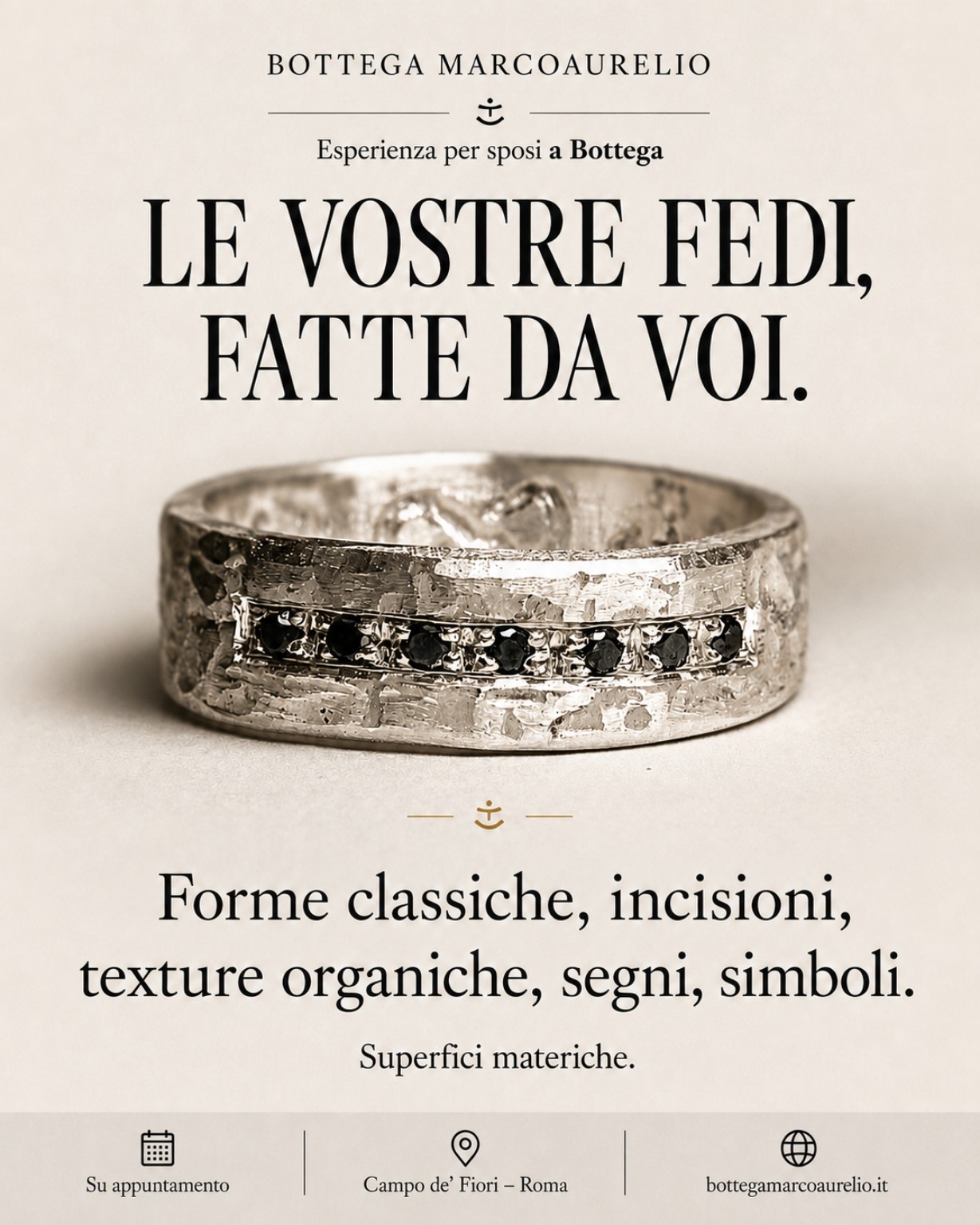
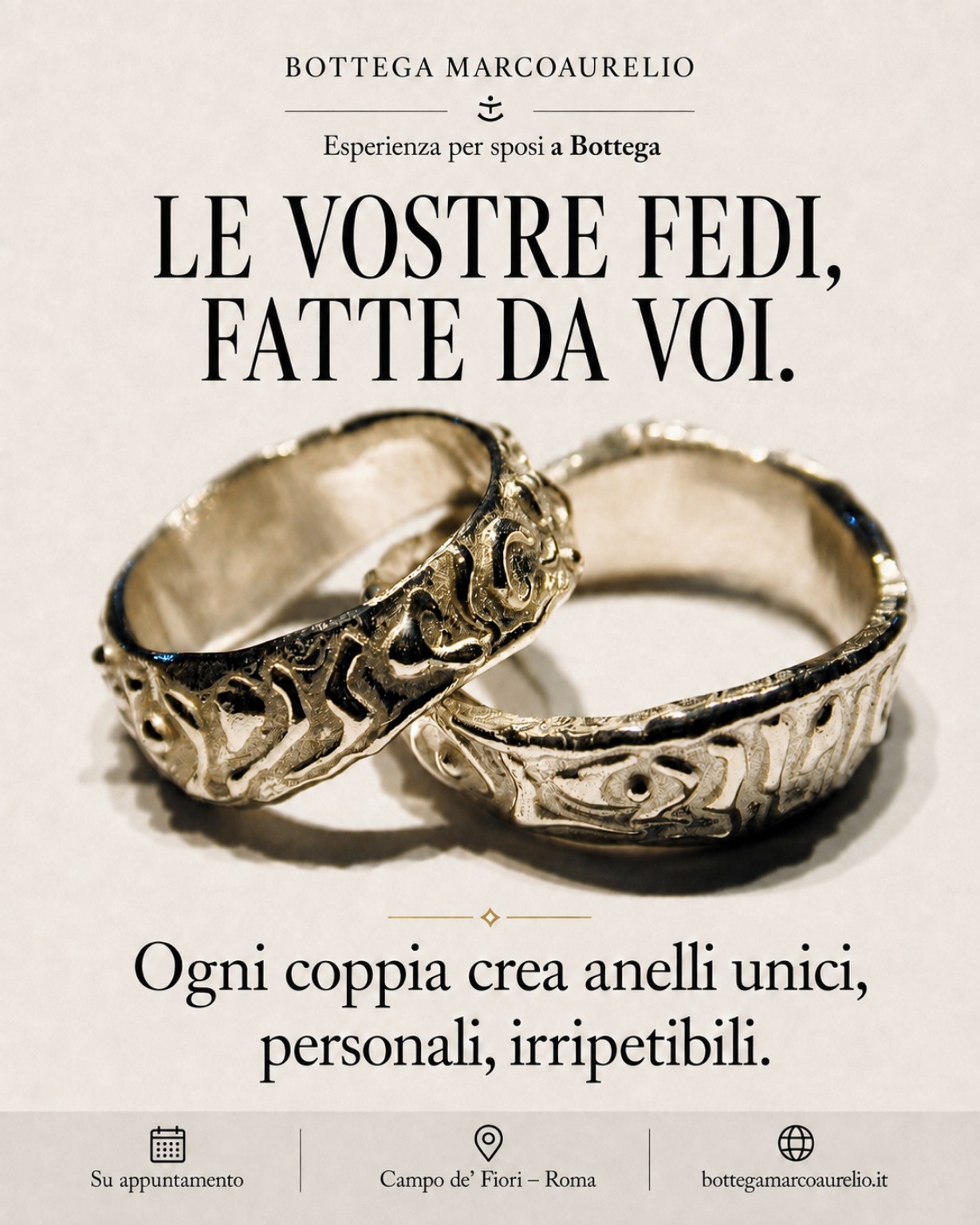
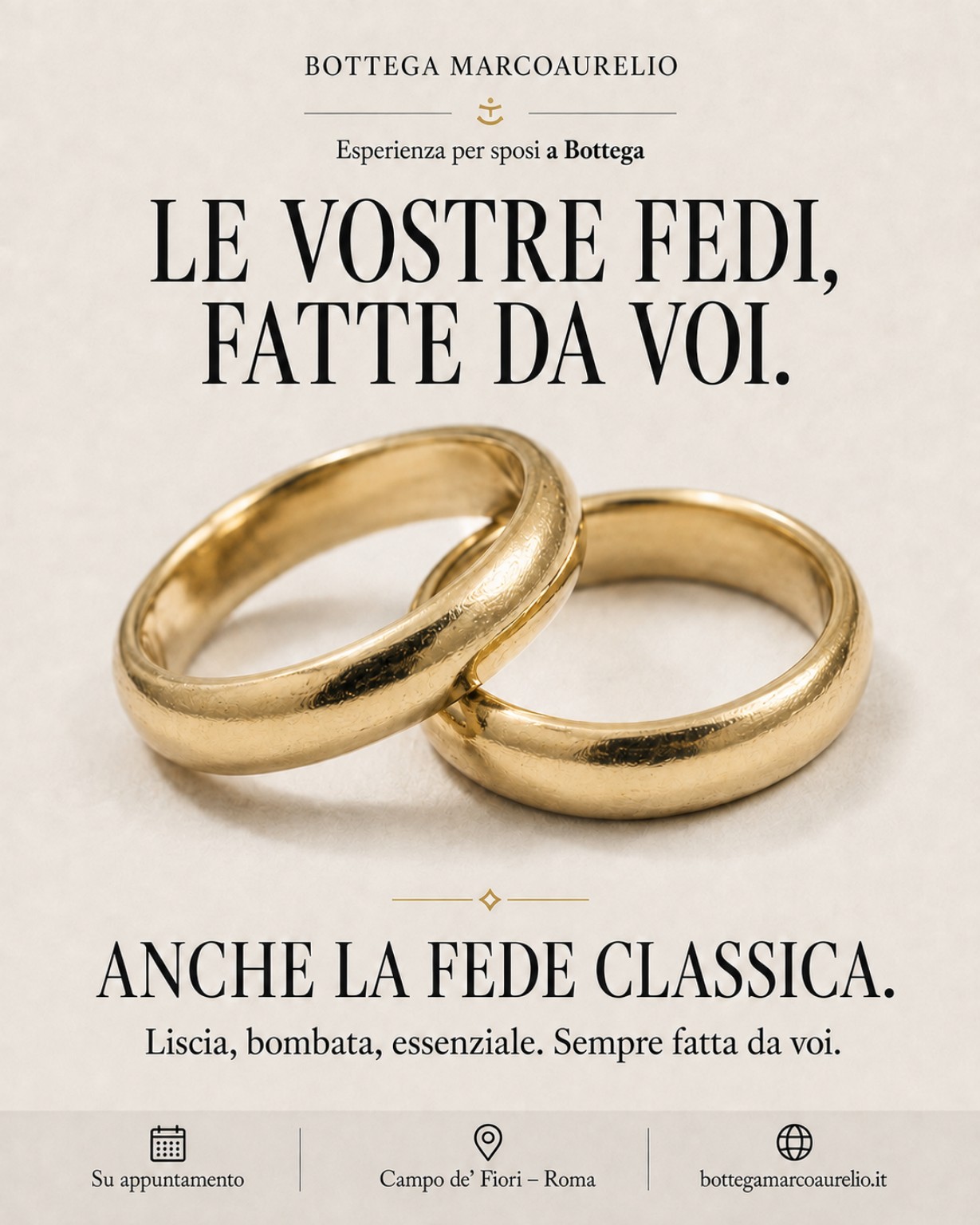
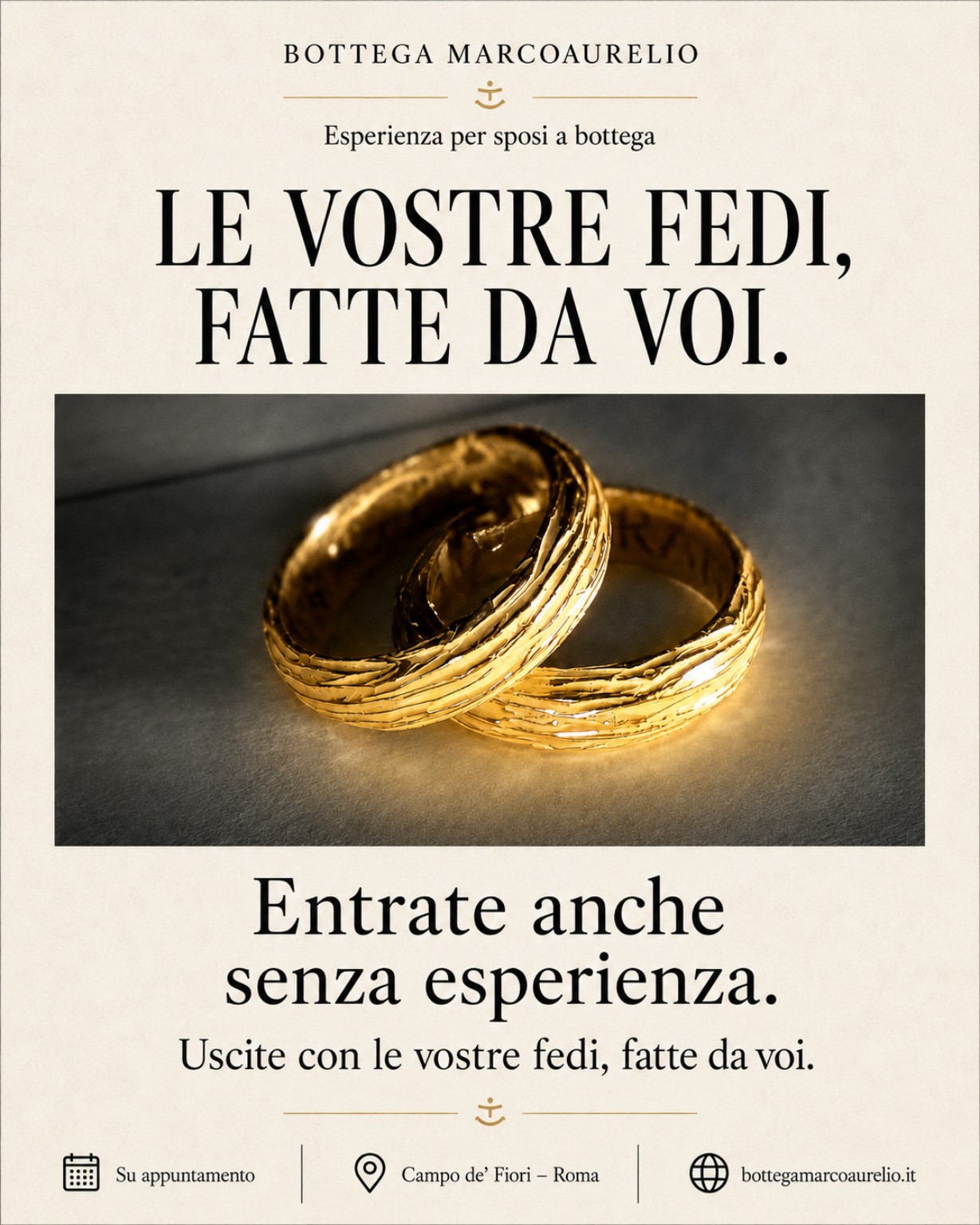
The promise is simple: make your wedding bands and learn how they are made.
Crea a Bottega
I do not call it a course. Every jewel has different needs. I call it Crea a Bottega: guided, made-to-measure work to arrive at a personal jewel, conceived by you or suggested by me, explained step by step and made by you here in the workshop.
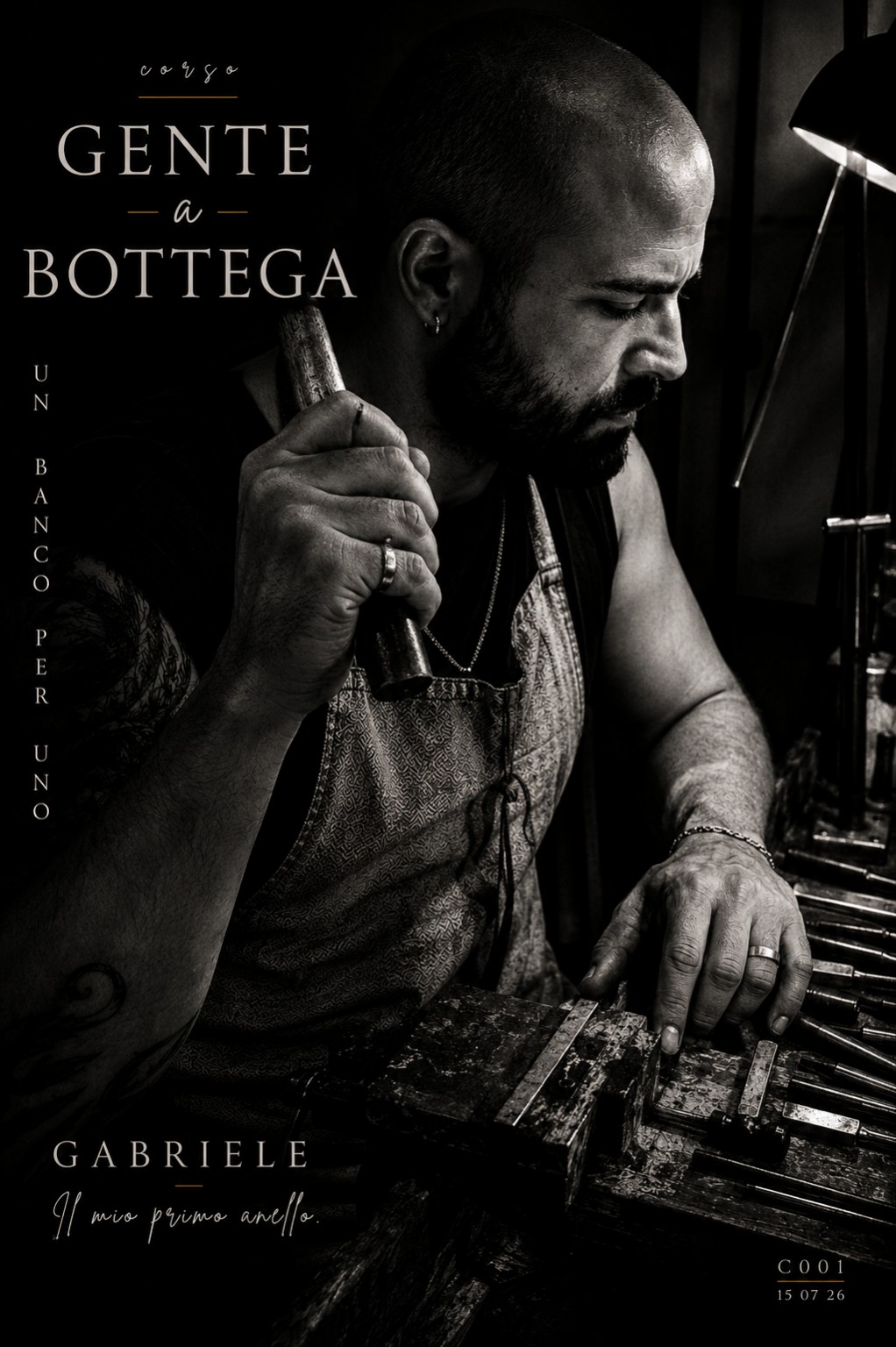
It can be yours, it can start from zero, it can take inspiration from one of my jewels, or from a project I suggest and guide you through.
I guide you through the steps.
The goal is to arrive at a personal, solid, beautiful jewel, born from a real process.
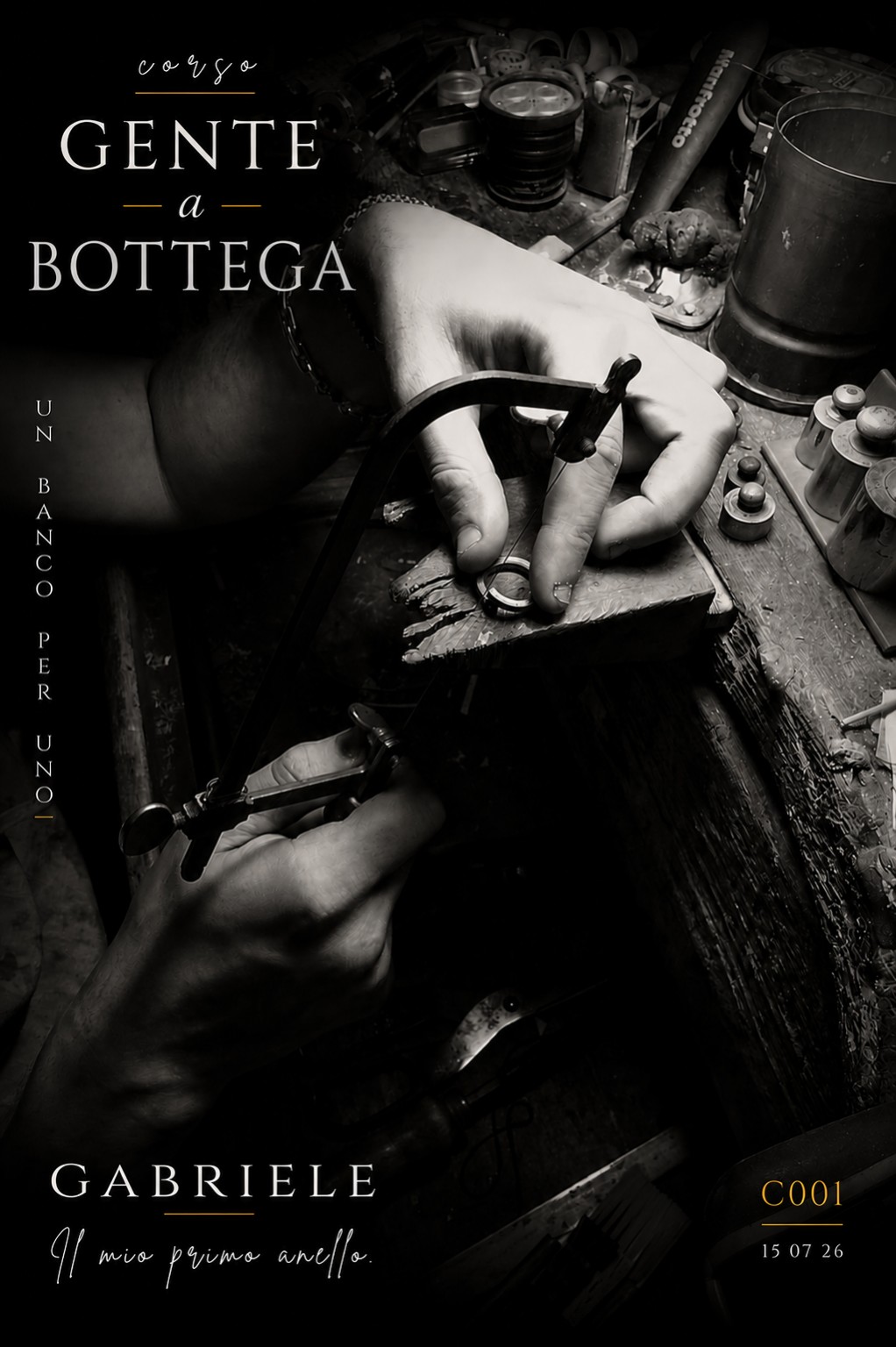
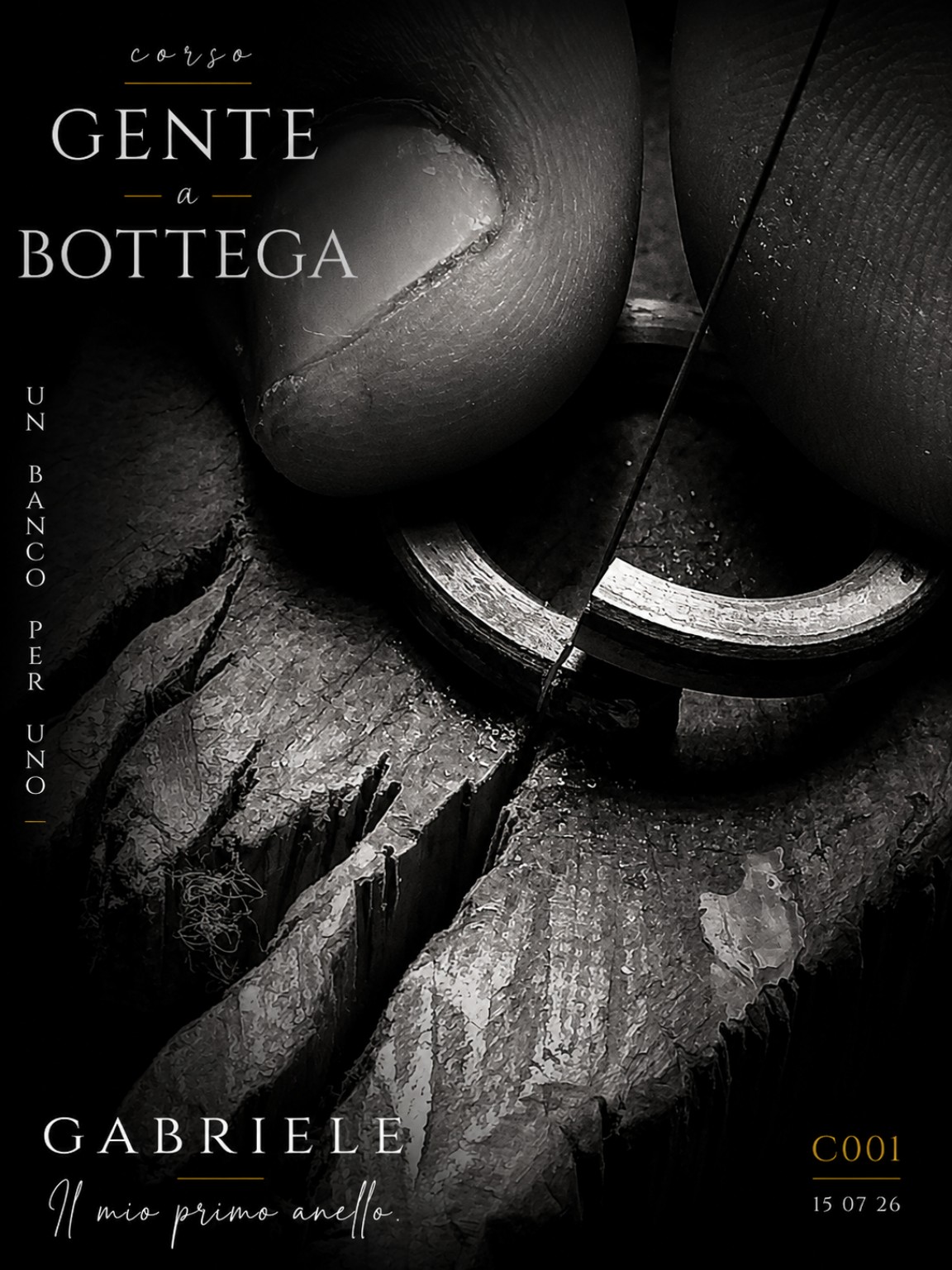
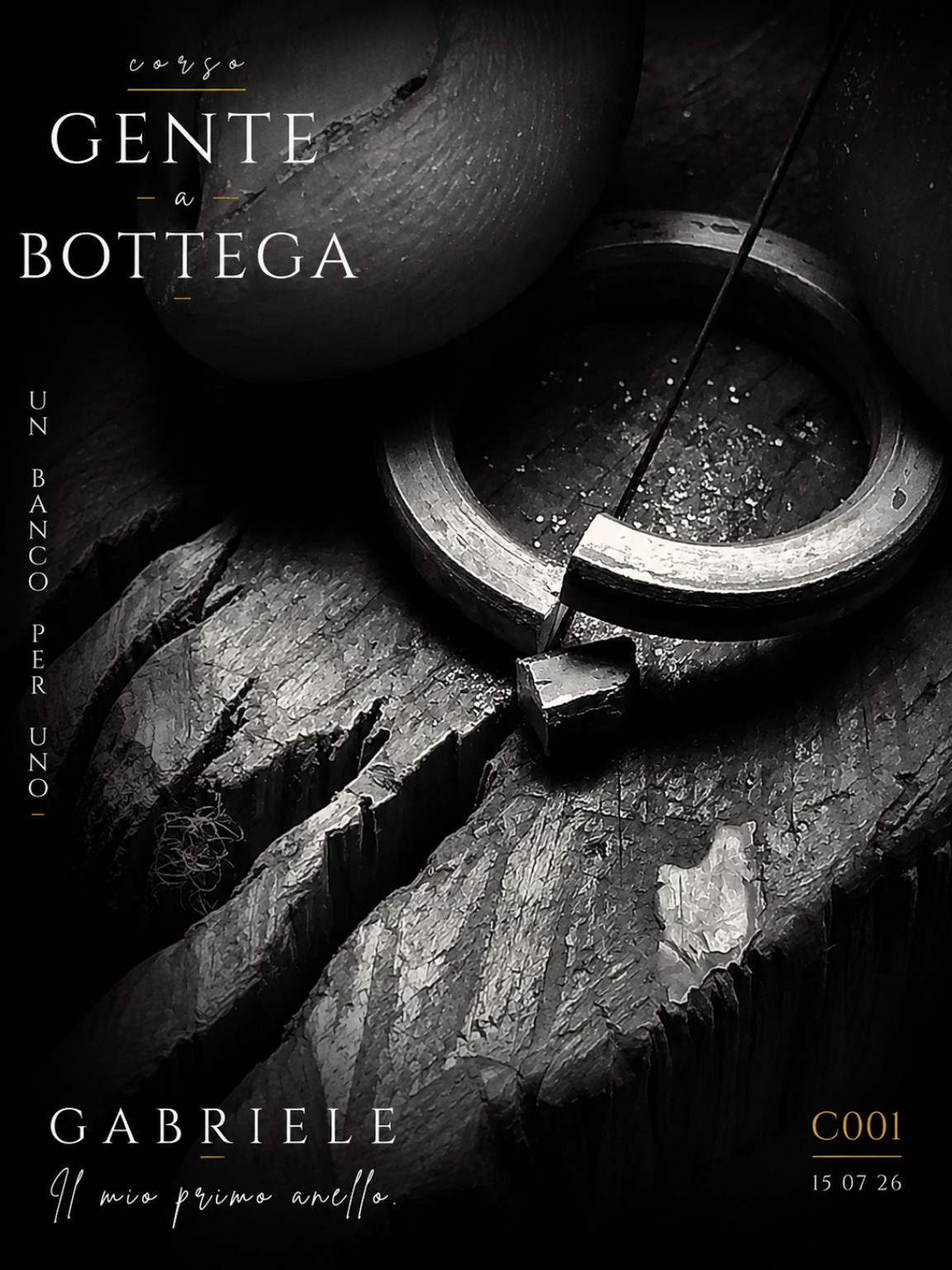
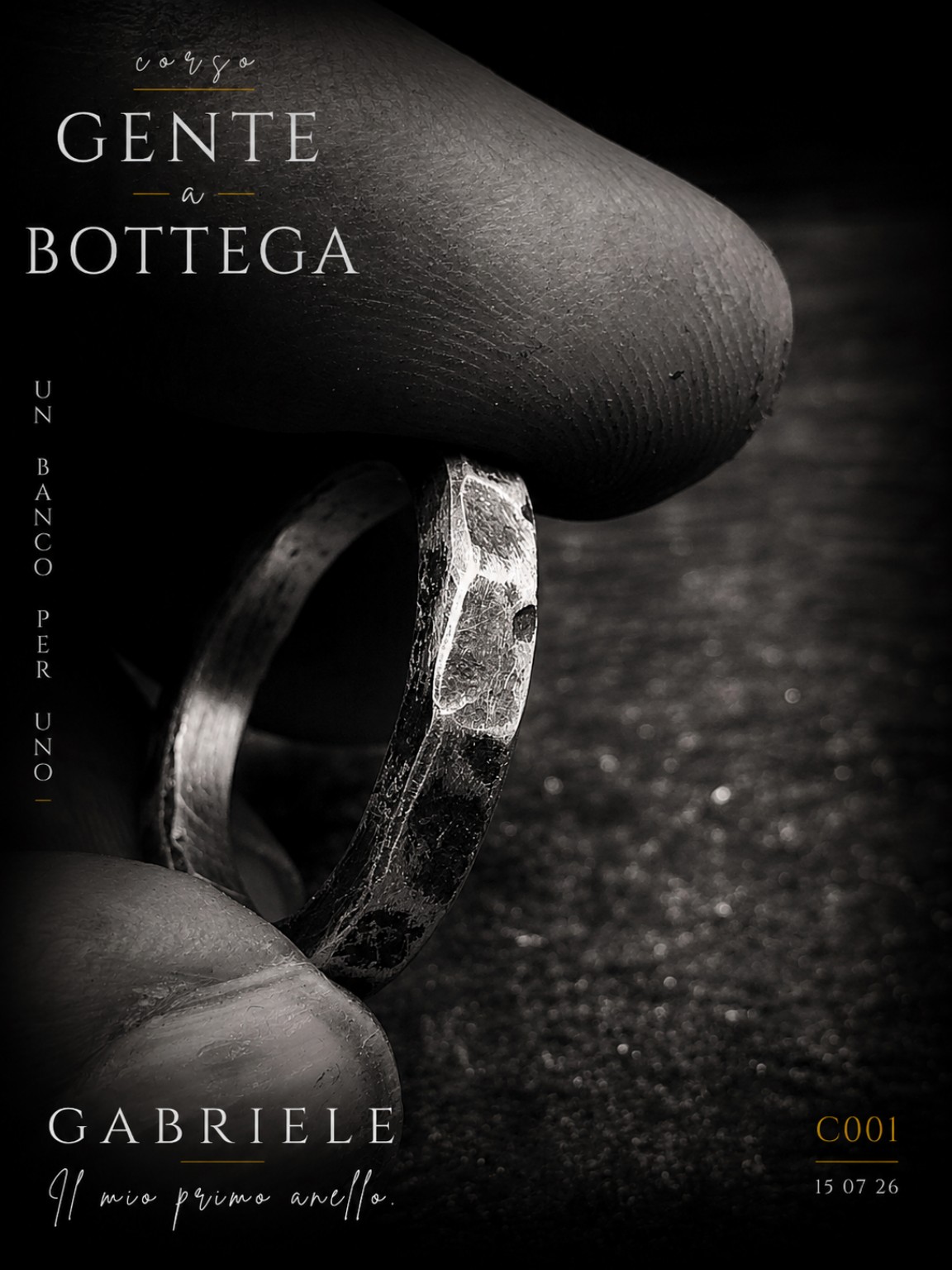
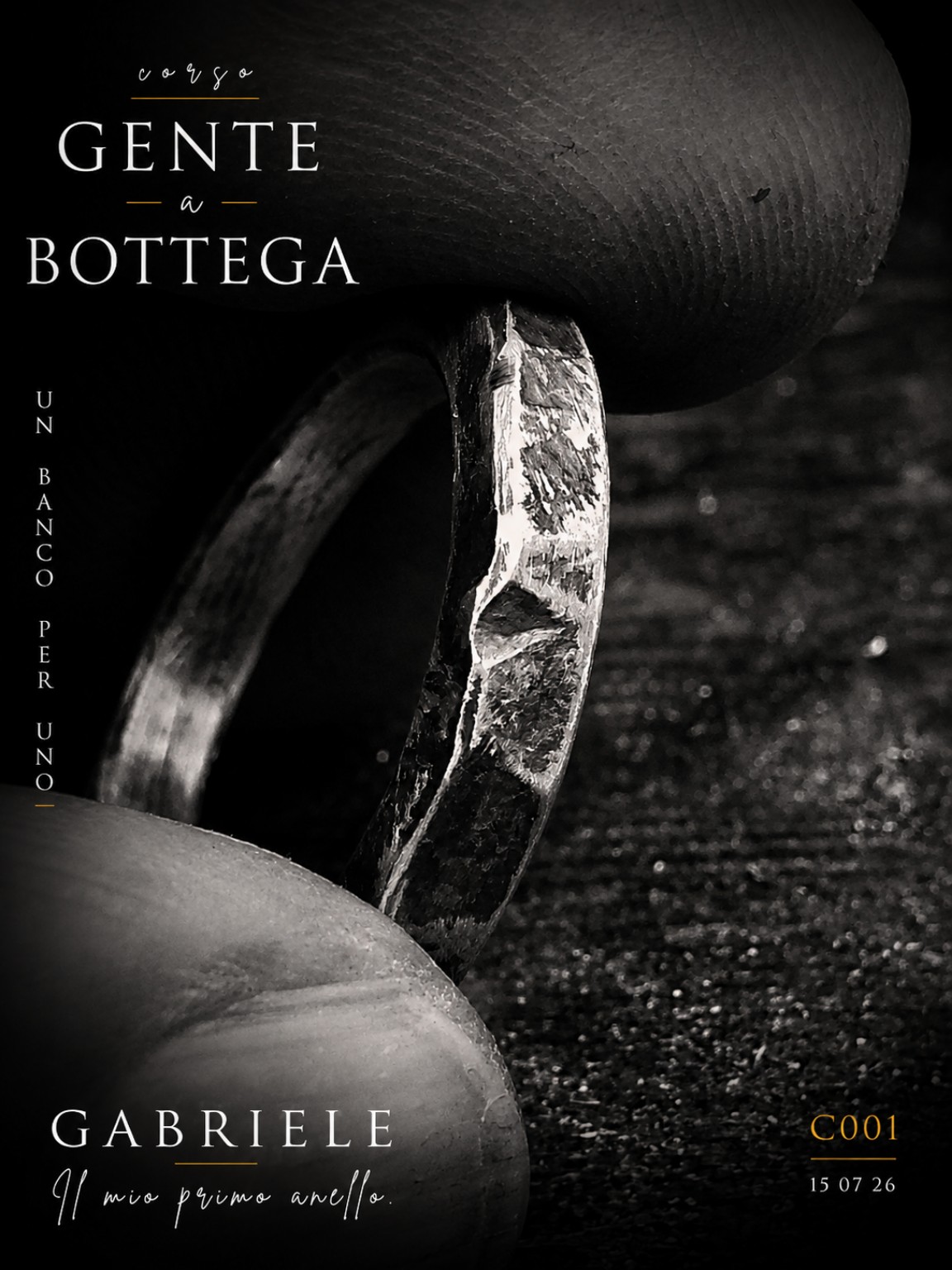
This is the right answer for someone who writes: “I’d like to create with my own hands”.
Choose at Bottega
Not everyone comes to the workshop to work at the bench. You can also choose an existing jewel, start from a collection, or ask for a piece designed for you and made by me.
If a jewel is available, you can buy it as it is, or we can adapt it to your size.
Kintsugi, Aria, Fedi, Astrolabio: families of language, not closed catalogues.
If you have an idea, a stone or a reference, we discuss a made-to-measure piece made by me.


Choose at Bottega is for those who want a Bottega MarcoAurelio jewel without working at the bench: available works, collections, commissions and made-to-measure pieces.
Collection Aria — Arabesco Nero
A thin arabesque, built wire by wire. A mosaic of tiny elements: light to the eye, complex to build.
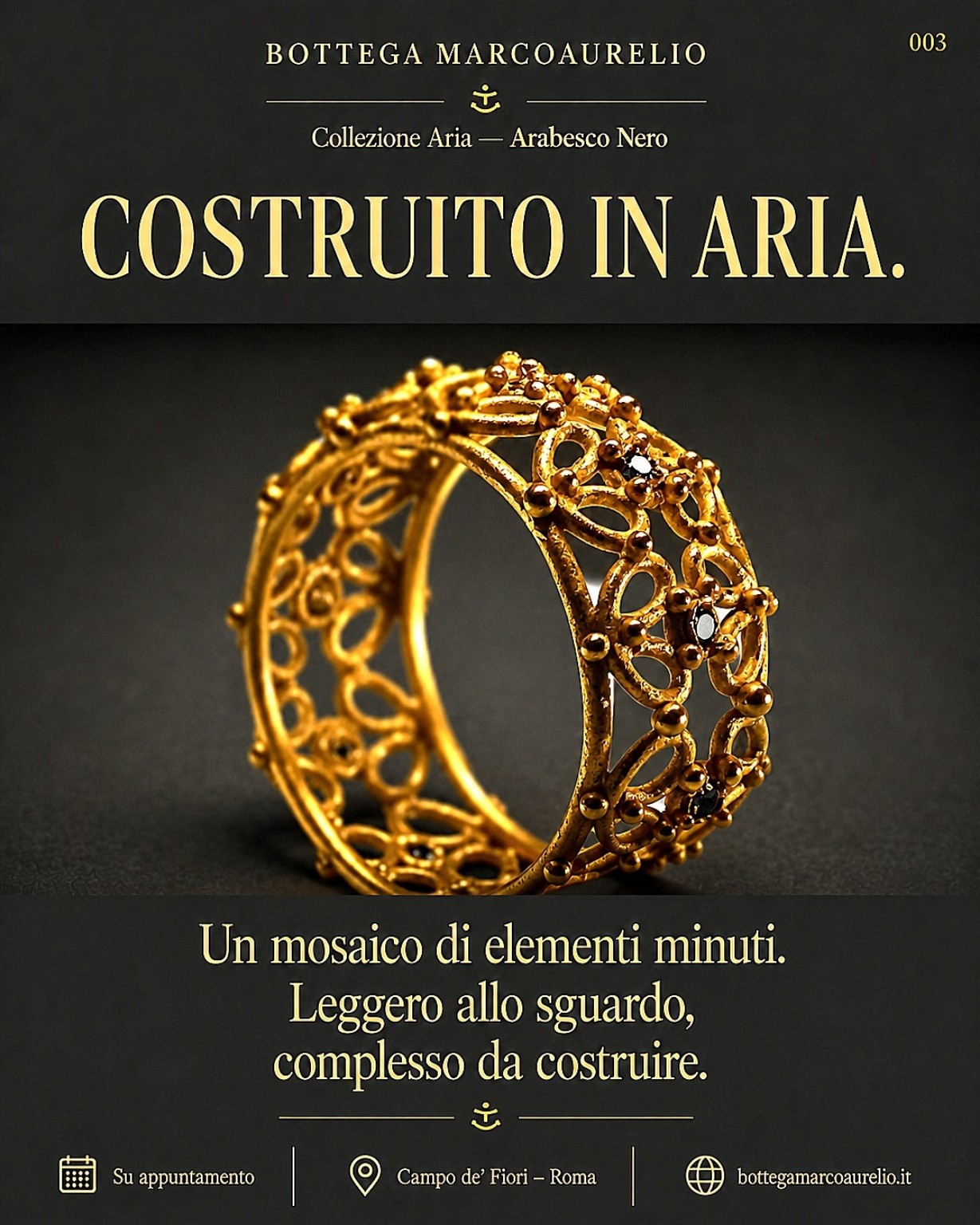
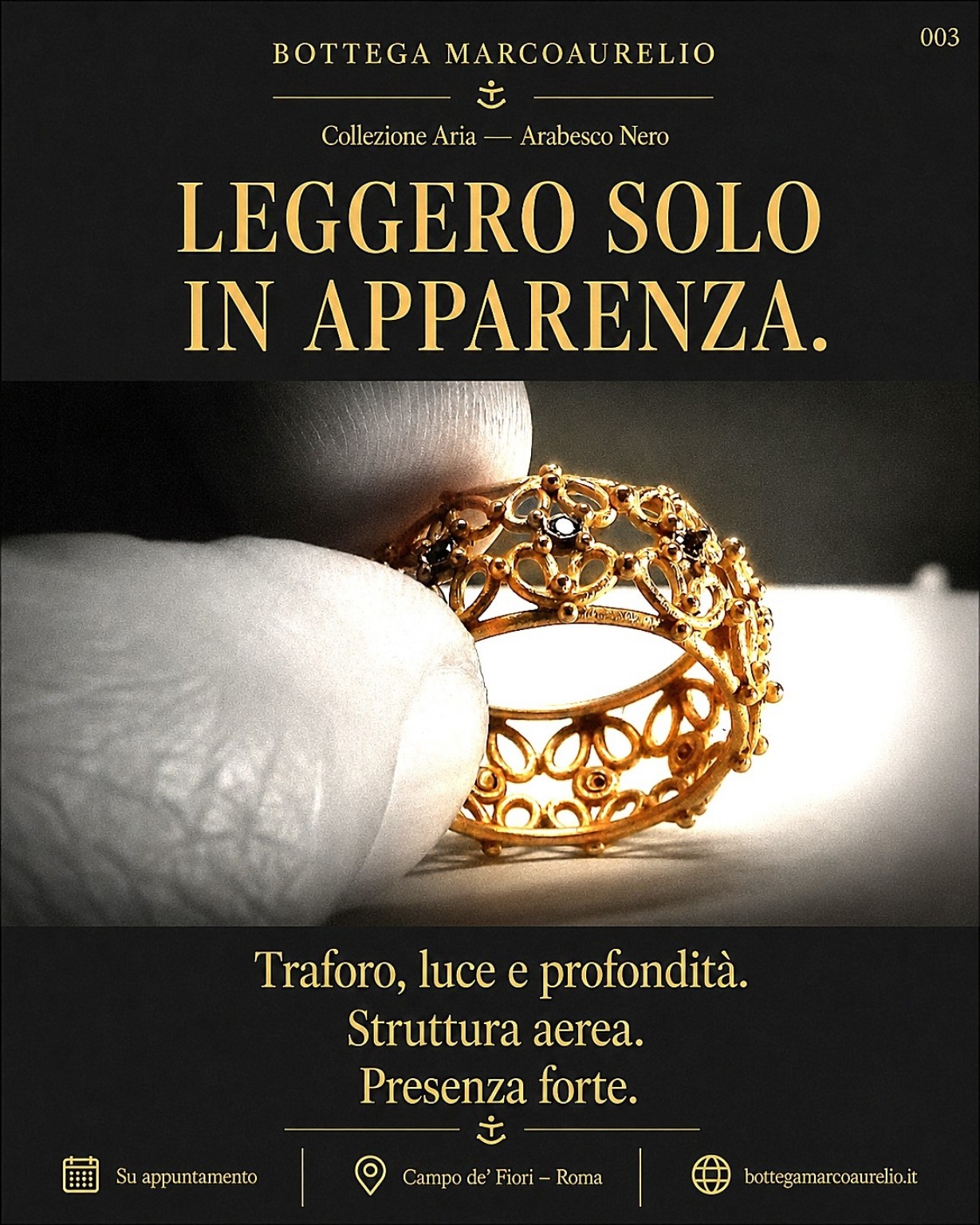
Arabesco Nero is a workshop manifesto:it shows the technical level, taste and complexity behind Fedi a Bottega and Crea a Bottega too. It is not decoration: it is proof of method.
Workshop method
In the workshop there is not only the finished piece. There are adapted tools, gestures, tests and technical choices. The right tool does not always exist. Sometimes it has to be made.
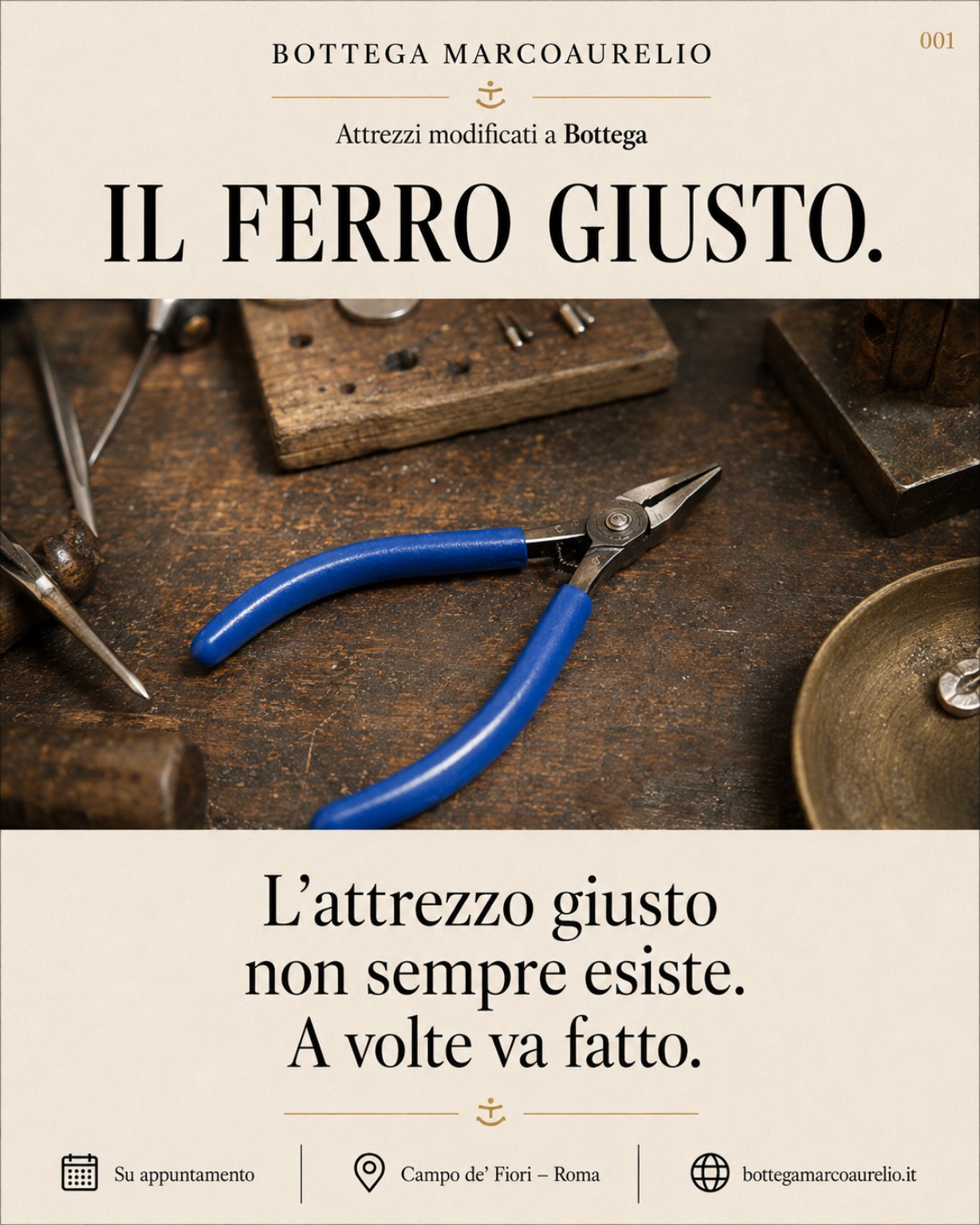
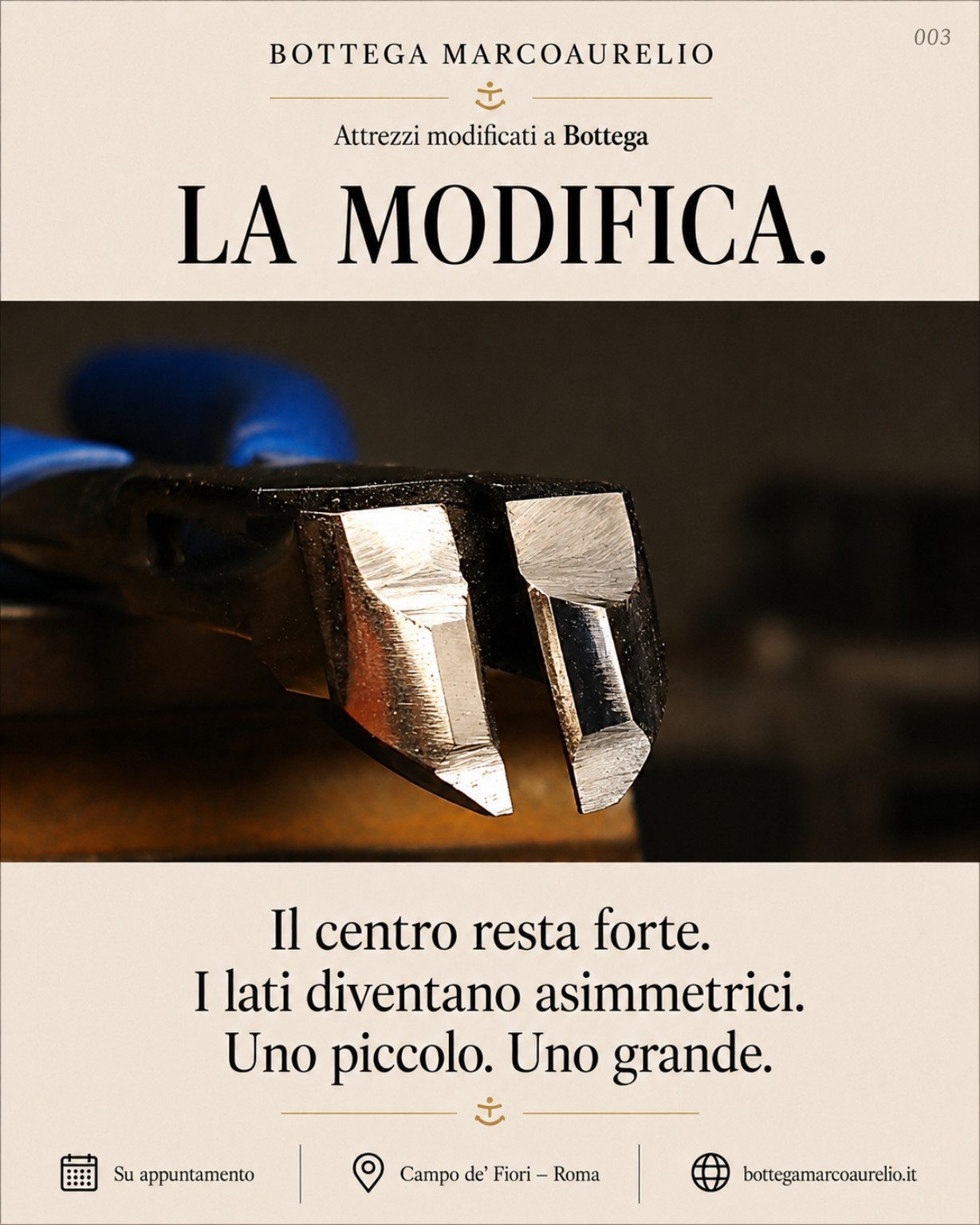
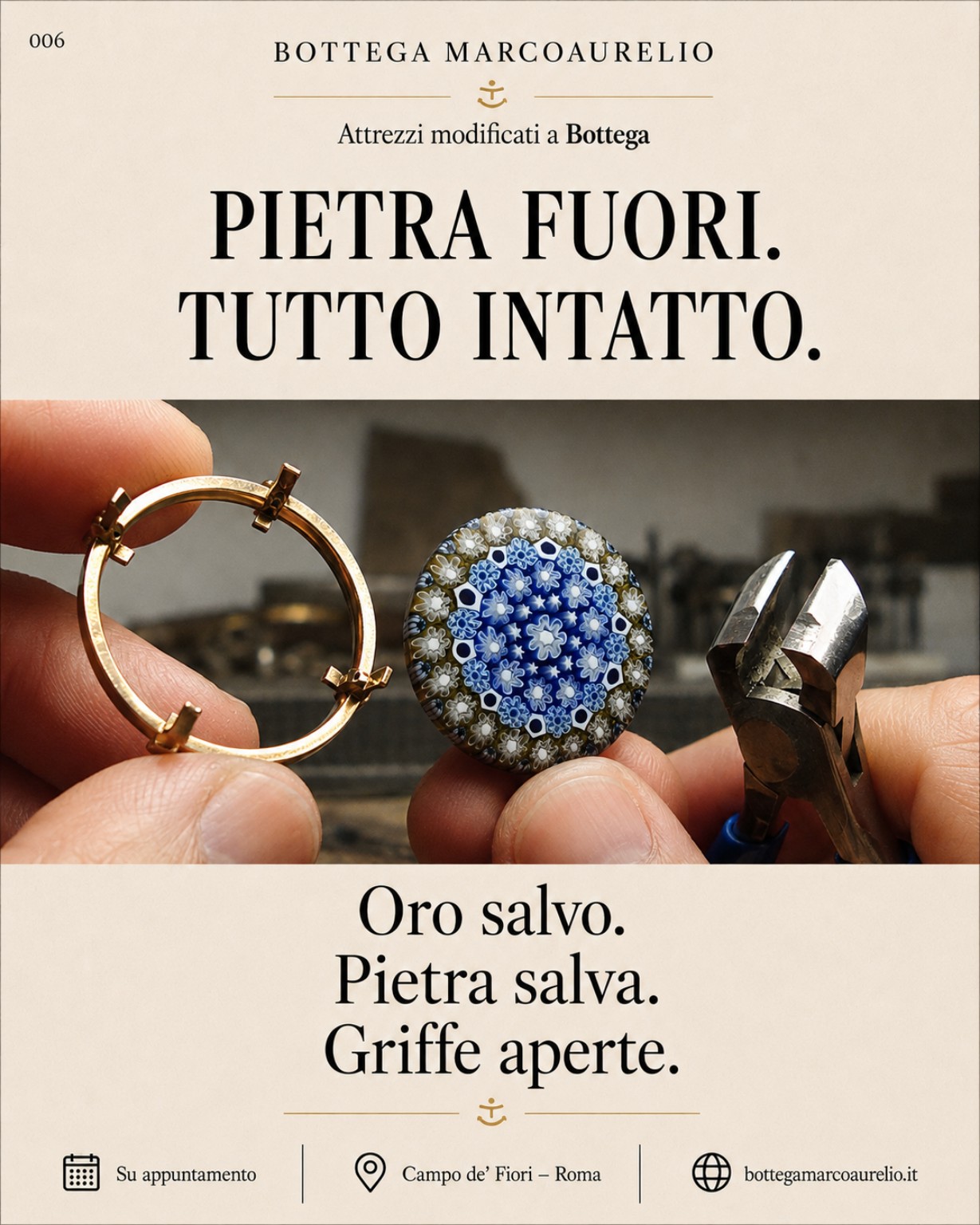
This section does not directly sell a service. It does something more important: it explains why the work at the bench and the jewels of Bottega MarcoAurelio are not entertainment, but method.


The fracture does not interrupt continuity. It makes it visible.


Lightness does not mean fragility. It means removing everything unnecessary.


Made-to-measure wedding bands by commission, built one at a time. For the hands-on experience, see Fedi a Bottega.


Finding your way does not mean owning a map.
New section
The Wind of Forgotten Gestures

A collection of techniques, tools and small workshop gestures that risk being forgotten.
Saved gestures
001· How is soldering done? 002· How is a pressed bezel made? 003· Why is annealed iron wire used?An illustrated guide to understand, step by step, one of the oldest gestures in goldsmithing.

There are many ways to solder metals, and every craftsperson develops personal preferences, tools and working habits over time.
In the workshop we often use a traditional tool called achalumeau: a small jeweller’s torch that allows very precise control of heat.
The fascinating part is that flame control is almost immediate. After years of practice, the movement becomes natural, almost instinctive.
Contrary to what one might imagine, soldering does not always mean pointing the flame directly at the exact joint. In most cases the whole piece is heated in a controlled and even way, allowing the heat to reach the joint.
When the temperature is right, the solder melts and flows into the desired point by capillary action.
The final result depends on many factors: temperature, clean surfaces, the choice of soldering alloy and, above all, the experience of the craftsperson.
It is one of those jobs that look simple when done well, but take years of practice to truly master.
There are many types of torch, and almost every goldsmith has a favourite one.
Shapes, controls and construction details may change, but the principle remains the same: controlling heat with precision.
The flame shown in the illustration is only one example. Each job may require a different adjustment.
An illustrated guide to understand, step by step, how a bezel can be closed without striking the object.

A pressed bezel is used when the object being set is too delicate to withstand blows or violent pressure.
The bezel is a simple strip of metal wrapped around the object. It is thinned first on the inside, to receive the coin or stone, and then on the outside, leaving a very thin edge.
Instead of striking the metal with a hammer, aspingitoreis used: a short tool guided by the fingers and held firmly in the palm.
The pusher does not work on the coin. It works only on the outer edge of the bezel, gently moving the metal inward through a series of small pressures.
The marks left on the edge are often not removed. They look like ornamentation, but they are also the sign of a choice: preserving what is fragile.
Not everything must be won by force.
Some things are preserved by accompanying them.
The plate shows the principle of the gesture. The real hand skill — the fingers, the pressure, the control — can only be learned by doing it.
An illustrated guide to understand, step by step, how a temporary wire can hold a piece together during soldering.

Annealed iron wire is soft, easy to bend and free from the spring memory of ordinary wire. For this reason it can be shaped around an object and will retain the form it is given.
Before use, it is often turned into a small braid. A length of wire is folded in half, twisted with the fingers, folded again and twisted once more, continuing until the binding is strong and stable enough.
La treccia viene poi avvolta intorno al pezzo da saldare e stretta lungo tutta la sua circonferenza. Non serve a bloccare soltanto il punto della giunzione: tiene insieme l'intero oggetto e impedisce che le parti si aprano o si spostino durante il riscaldamento.
The pliers simply grip the two ends of the binding. The wire, not the pliers, supports the piece. This means the pliers do not need to clamp the metal directly and do not draw unnecessary heat away from the flame.
Because the iron has already been annealed, it does not try to straighten itself. It also withstands temperatures far higher than those required for soldering silver and is unlikely to stick to the piece.
Once the soldering is complete, the binding is easily removed. Like many workshop tools, it has done its job by holding everything still at the necessary moment, then disappearing almost without a trace.
Annealed iron wire is not used to solder. It is used to keep everything else still.
Ordinary wire tends to spring back, may shift or loosen, and is harder to keep in the required shape. Annealed wire, by contrast, grips the piece continuously and retains the form it is given.
The best tools are often the ones that, once the work is finished, seem never to have existed.
The techniques illustrated in this collection describe the way I work in my own workshop and are the result of my personal experience.
Goldsmithing includes different schools, tools and procedures. Other craftspeople may achieve the same results by following different methods.
These pages are not intended to replace a manual or a professional course. They are simply the testimony of a craft, told through the gestures that have accompanied my work.
Anyone who chooses to put the processes described into practice does so at their own responsibility.
6:00 PM–9:00 PM
Three hours of public opening are not too few: this is time dedicated to appointments. The rest of the day is dedicated to designing, making jewellery and bench work.
Yes. Before we arrange a meeting, tell me what you would like to have made, the approximate budget you have in mind, and how you discovered the workshop.
Your budget helps me assess whether it makes sense for us to meet in the first place. You do not need an exact figure: a spending range you would like to stay within is enough. It allows me to assess whether the project is compatible with the materials, work and time required, or whether I can suggest an alternative.
If you have no idea what it might cost, tell me, but please still indicate how much you would consider spending. Without this reference, I cannot tell you whether a meeting to discuss an estimate would be useful.
How did you discover the workshop? Through Google, the website, Instagram, Facebook, walking past the shop window, or a recommendation? If a particular jewel, photograph or page caught your interest, send me the reference.
This helps me understand what you already know about my work and what information you need before an appointment.
When requesting an appointment, please always clearly explain the reason for your visit and, whenever possible, include photographs or reference images.No. Jewellery design, assessment of materials and gemstones, and preparation of a quote take place exclusively in person, at the workshop.
A scheduled phone call can provide initial guidance: understanding what you would like to do, whether your request falls within the work I undertake, and what to bring to the appointment.
A phone call does not replace the meeting. I do not conduct remote design or quotation sessions, either by phone or by video call.
When you are able to visit, message me a little in advance: we will arrange an appointment and I will set aside the time your request needs.


A BOTTEGA 008 · 09/09/2026 · 17:51 (Roma) · FAQ21 · TEL1